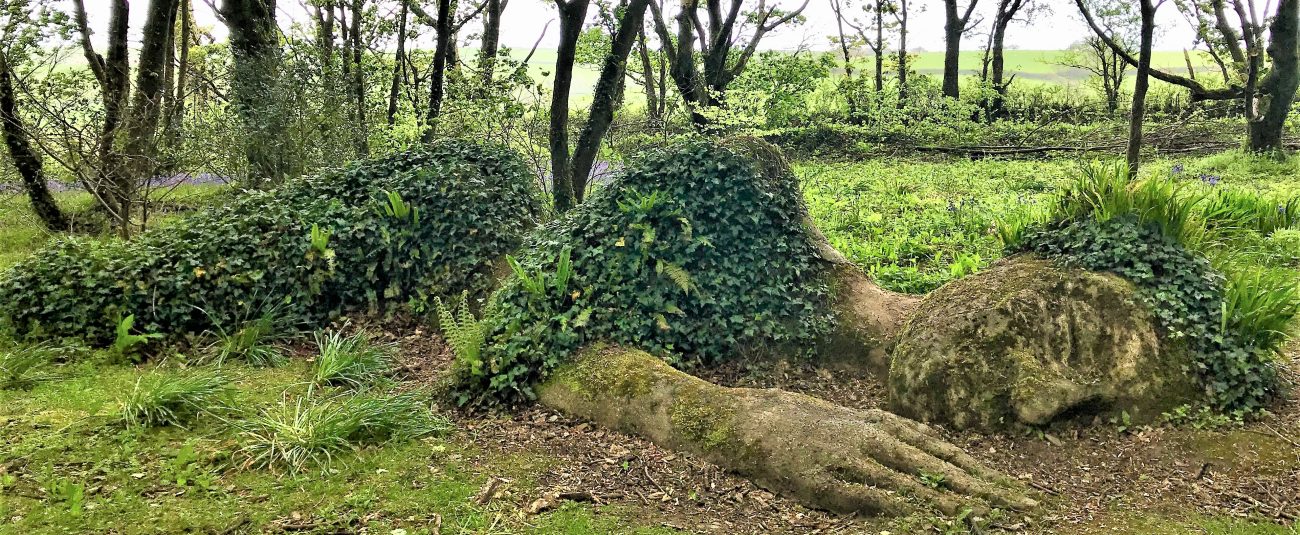
Art and Image
The late Ian Siddons-Heginworth has developed Environmental Arts Therapy.
Siddons-Heginworth, I. Environmental Arts Therapy and the Tree of Life.
Siddons Heginworth, I. & Nash, G. Environmental Arts Therapy: The Wild Frontiers of the Heart. Routledge.

A community of Environmental Arts Therapy UK has grown from his work. They offer CPD courses.
The School of Environmental Arts Therapy offers a one year course to those qualified in arts therapies.
The Journal ‘Gatherings’ has a special issue on Ecopsychology and Art
 Agnes Denes one of the pioneer of the environmental art movement.
Chris Drury is one of the leading land artists in Britain. One of his projects called ‘Heart of Reeds’ (below) is a reed bed on the edge of Lewes, Sussex inspired by images of the human heart.
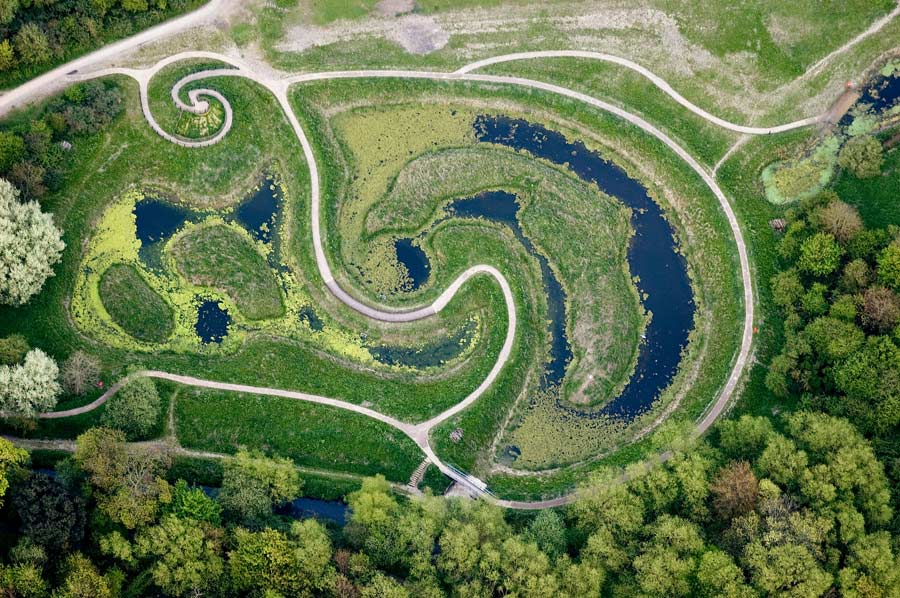
Cornelia Konrads (below) is an inspiring land artist
Andy Goldsworthy is another major land artist in the UK. catalogue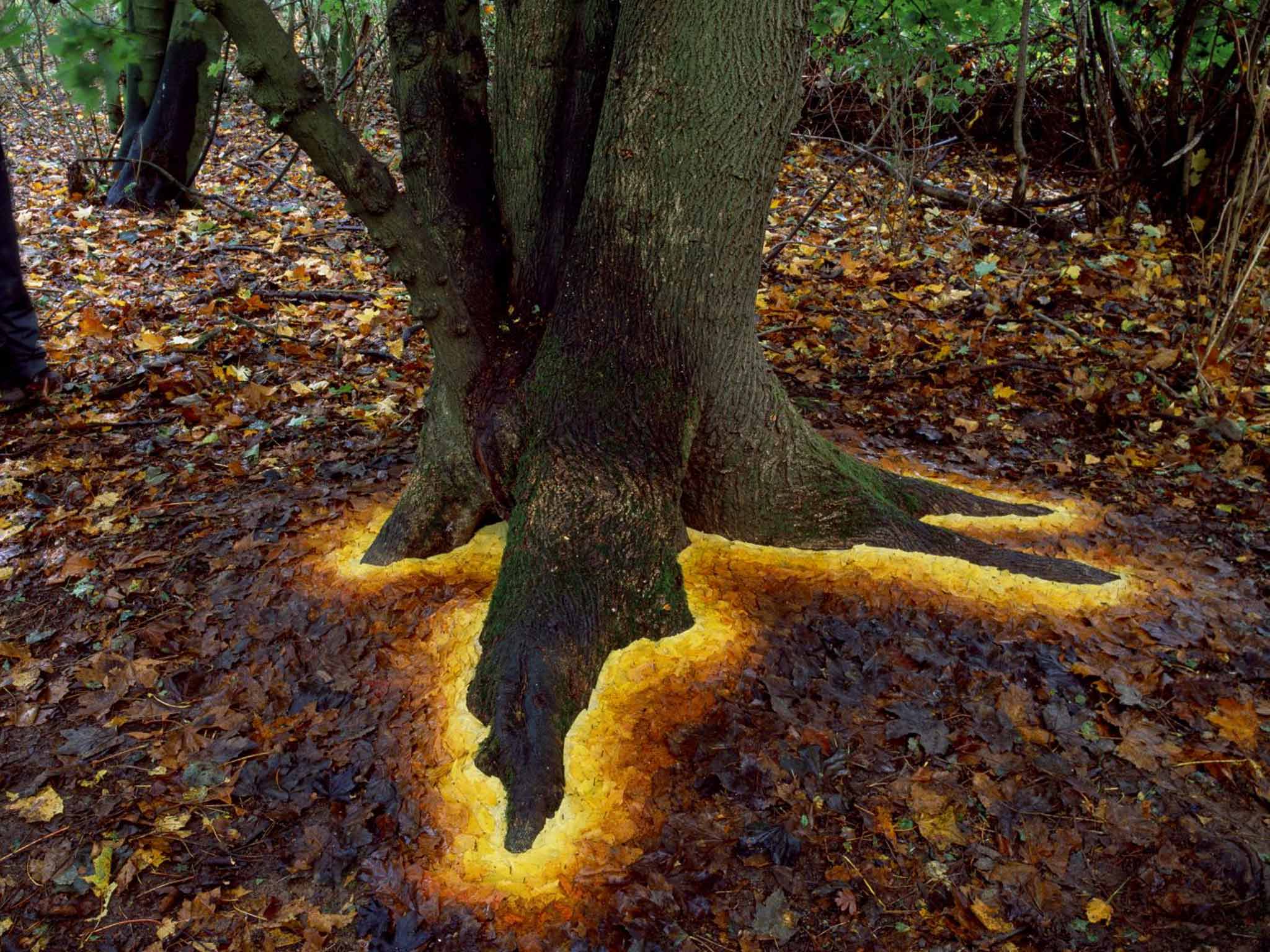
Bavarian artist Nils Udo offers a symbolic piece ‘The Nest’ on home.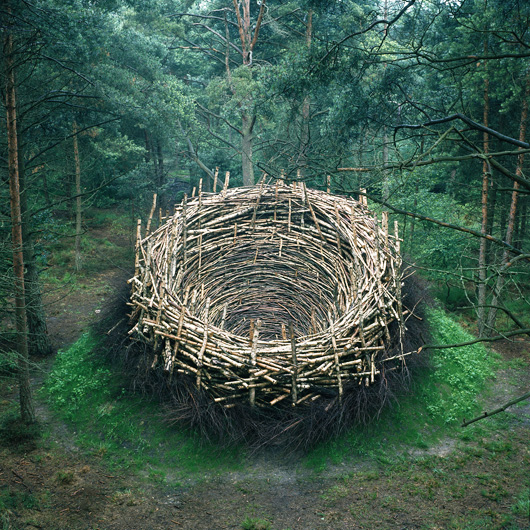
More pieces in this review
Viola Sampson and I put up on an exhibition of our photographs in December 2002 called
‘Double Vision’: Self Portraits of the Earth.
Here is the biography of the artist:
Artist: PLANET EARTH
Born: 4.57 billion B.C., MILKY WAY GALAXY
Place of Study: SELF-TAUGHT
 Biography
Earth began birthing in the Milky Way approximately 4.57 billions years ago. Earth has been a practicing artist all her life, concentrating on beauty and devastation within nature.
After her latest and most famous ice installation she began to explore expression through a multitude of life media. Quite recently this has included the species homo sapiens.
In the last c. 200 years a particular aspect of this project, homo industrialis destructivensis, has become increasingly separated from her other work.
In this short time there have been dramatic changes in her art, which seem to reflect her increasing ill health. In particular, technological advances have gone hand in hand with climate disruption and pollution. These rapid new departures are reshaping her current work in profound ways, and even limiting the diversity of her creative expression. (She is losing 75 species per day, perhaps more).
One wonders whether this particular phase is coming to an end, as homo industrialis destructivensis is dominating Earth’s artistic endeavors and threatening her creative spirit.
Or will radical changes bring that part of her expression back into balance?